- About KOMISS
- >
- KOMISS over 20 years
KOMISS over 20 years
Our Passion for the KOMISS

Professor Dae-Hyun Kim
Daegu Catholic University Hospital
I have been requested by Hee-Seok Yang, the Executive Director of Information and Computing, to write a manuscript for the KOMISS webzine titled “Our Passion for the KOMISS.” It is an honor to summarize and share the efforts of the many individuals who, with burning passion over the past 20 years, founded and led KOMISS into the internationally recognized academic society it is today. I hope to share, however humbly, the beginnings and the grand leap forward of KOMISS.
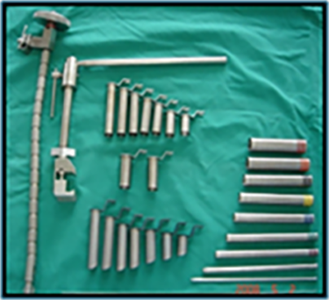
Since the 1980s, as the use of surgical microscopes became commonplace, interest in minimally invasive surgical (MIS) treatments in the field of spinal surgery began to grow. With the advancement of various spinal surgical methods, new micro-instruments, and endoscopic techniques for surgical diseases—alongside the rapid development of equipment including endoscopes—the general perception of spinal surgery began to shift.
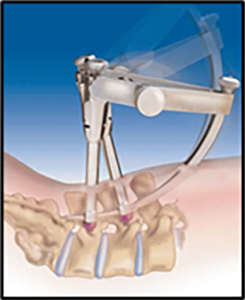
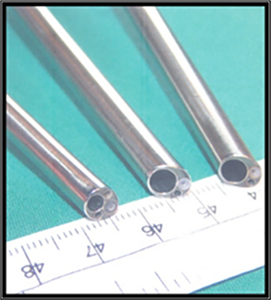
In line with this trend, the Korean Minimally Invasive Spine Surgery Society (KOMISS), an affiliate of the Korean Spinal Neurosurgery Society, was formed in 2002. Led by Professor Choon-Keun Park of the Catholic University of Medicine, the society aimed to promote academic advancement and exchange regarding clinical and basic research in the field of MIS spine surgery. At the time, due to the rapid changes in spinal surgery, even spinal specialists found it difficult to understand newly developed instruments and acquire surgical skills. Therefore, there was a strong demand for KOMISS to verify instruments introduced to the market and the surgical techniques using them to determine their actual clinical benefit to patients. As neurosurgeons in Korea are relatively active in spinal surgery, Korea emerged as a leader in the global MISS field, necessitating the establishment of a research society for systematic research and education.
Consequently, in May 2002, with the active support of the Korean Spinal Neurosurgery Society, the Korean Minimally Invasive Spine Surgery Research Society was launched by founding president Choon-Keun Park and 14 members of the preparatory committee. On June 1, 2002, the 1st Academic Conference and Inaugural General Meeting were held at the auditorium of Gangnam St. Mary’s Hospital (now Seoul St. Mary’s Hospital). It was a great success, attended by many neurosurgical spine specialists, marking the historic start of the society.
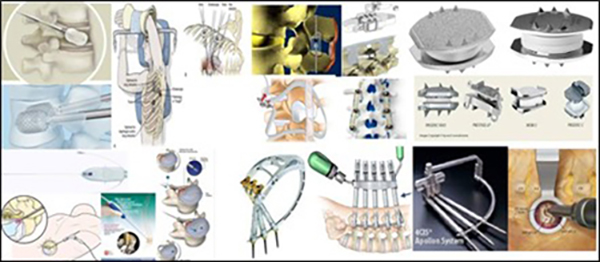
Since then, regular academic conferences and general meetings have been held annually. The inaugural conference featured a hands-on workshop on Ballooning Kyphoplasty by Professor Hansen Yuan and a live surgery demonstration of Thoracoscope-assisted thoracic Corpectomy (MACS) by Professor Daniel Kim. Subsequently, techniques such as Osteoplasty, interspinous U, Arthroplasty (Prodisc-L & C), percutaneous Dekompressor, posterior dynamic stabilization (DIAM, Dynesis), Hydroject, MAST-TLIF & percutaneous pedicle screw fixation systems, and cervical microforaminotomy were introduced.
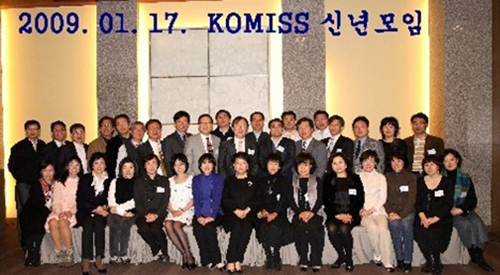
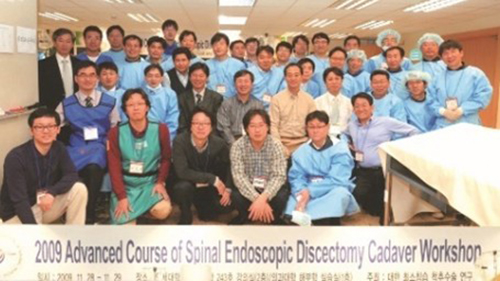
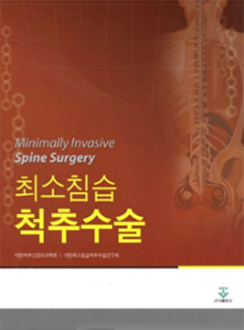
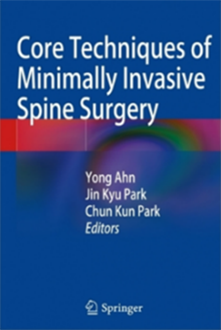
In 2009, a New Year’s greeting event with families was started in January to foster fellowship among members. In November of the same year, to meet the increasing demand for education on MIS techniques, the KOMISS Advanced Course on endoscopic spinal surgery was held in the autumn. As Korean MIS spine surgery technology gained global recognition, the need for an international forum arose. Since 2012, an International Symposium and Cadaver Workshop have been held biennially alongside the advanced course. In the same year, the society published the textbook “Minimally Invasive Spine Surgery,” which established the principles of MISS and summarized the latest surgical methods. In 2023, the publication of the “Core Techniques of MISS” textbook further contributed to promoting the status of Korean MIS spine surgery.
In 2014, along with the 2nd International Academic Conference, the Korean-only website was extensively revised to launch the English website (www.komiss.org), providing a window for communication with spine surgeons worldwide. In 2015, through the dedicated efforts of the steering committee, the society achieved the feat of being officially elevated from a research society to the Korean Minimally Invasive Spine Surgery Society. It also merged with the Korean Society of Minimally Invasive Spine Surgery (ISMISS Korea, President Chun-Kee Chung), which had been established in 1997, becoming the undisputed representative society for MIS spine surgery in Korea.
In 2016, the society hosted the World Congress of Minimally Invasive Spine Surgery and Techniques (WCMISST) in Jeju. To establish its academic prestige, the society launched its official journal, the Journal of Minimally Invasive Spine Surgery & Technique (JMISST) (Past Editors-in-Chief: Sang-Ku Lee, Jong-Tae Kim; Current: Hyeun-Sung Kim). JMISST is currently indexed in global databases, including Scopus.
The purpose of this society is to promote academic development, academic exchange, and fellowship among members regarding clinical and basic research in MISS. Accordingly, since 2016, case conferences have been held to further strengthen member fellowship. In September 2017, KOSESS (Korean Society of Endoscopic Spinal Surgery) was formed as a sub-organization of KOMISS to focus on endoscopic surgery. In the same year, active members of KOMISS also formed the Korea UBE Society (now the World UBE Society). Since 2018, case conferences have been held twice a year under the name "Spring and Autumn SUMMIT," and since 2021, the Summit has been held jointly by KOMISS and KOSESS.
While the regular conference was held in May and the Advanced Course in December from 2009 to 2019, the COVID-19 pandemic in January 2020 led to the unprecedented cancellation of the May 2020 conference. Consequently, the regular conference was held online in December 2020. This aligned with the bylaws stating that the fiscal year runs from January 1 to December 31, and the Advanced Course was moved to May. Despite the pandemic, a cadaveric workshop was resumed in Daegu in May 2021. As the pandemic subsided, the society has continued to hold the Advanced Course in May and the Regular Academic Conference in November annually through 2025.
Among the MIS techniques and equipment introduced through KOMISS over the last 20 years, several have established themselves as standard operative procedures: Vertebroplasty/Kyphoplasty, Neuroplasty, MAST-TLIF, percutaneous pedicle screw fixations, PELD/PEID, MIS cervical posterior foraminotomy, OLIF, uniportal and biportal (UBE) endoscopic decompression/discectomy of the C-, T-, and L-spine, and lumbar endoscopic fusion (endo-TLIF).
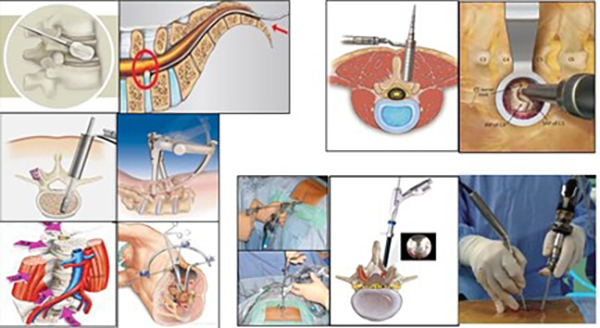
On a personal note, after my fellowship at New York University and the University of Chicago (2002–2004), I began MIS techniques using MED-MD/Tubular retractors. Since 2008, I started performing endoscopic discectomy (YESS) and have continuously applied it alongside MED-MD and MIS-TLIF. Since 2017, I have been performing UBE endoscopic surgery (lumbar decompressive laminectomy, discectomy, thoracic laminectomy/flavectomy for OLF, posterior cervical foraminotomy for radiculopathy, and posterior ULBD for myelopathy, as well as lumbar endo-TLIF with percutaneous pedicle screw fixations). I am also expanding these applications to spinal IDEM tumor removal and cervical instrumentations (odontoid screw, C2 lagging pedicle screw, posterior C1-C2 fixations).
The achievements of KOMISS to date are the result of the effort and passion of founding president Choon-Keun Park, subsequent presidents, advisors, and executives since 2002. Today, thanks to the leading roles and activities of its outstanding members, KOMISS has reached its peak status on the international stage and stands at the world's top level in academic contributions through numerous publications.
Past Presidents and Advisors
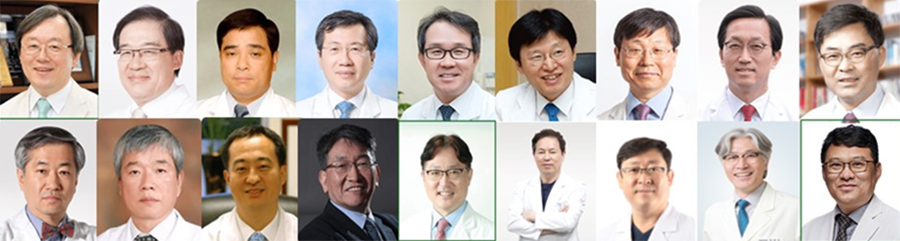
ISMISS Presidents and Advisors

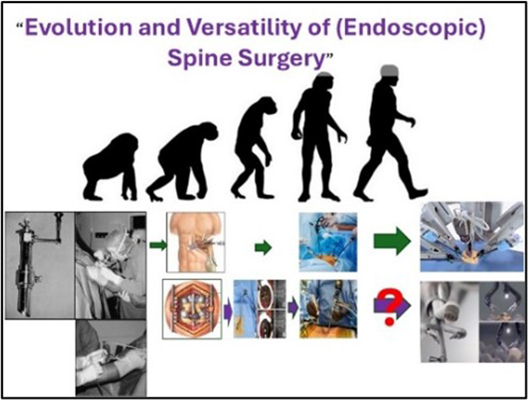
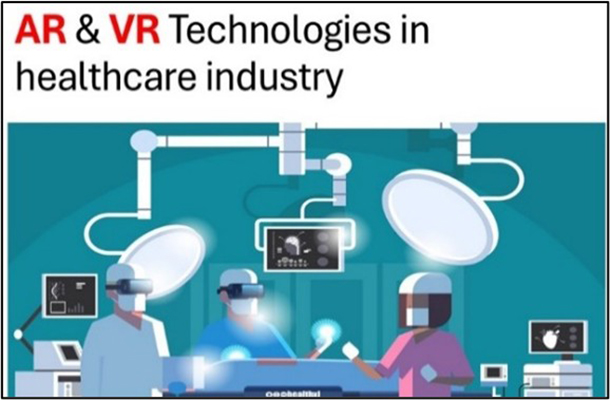
Looking to the future, we anticipate the continued development of endoscopic spinal surgery, including endo-fusion. Through the accumulation of experience in endoscope-assisted removal of intradural tumors and instrumentation, we must strive for advancement toward robotic surgery and the integration of AR, VR, and AI into MISS.